
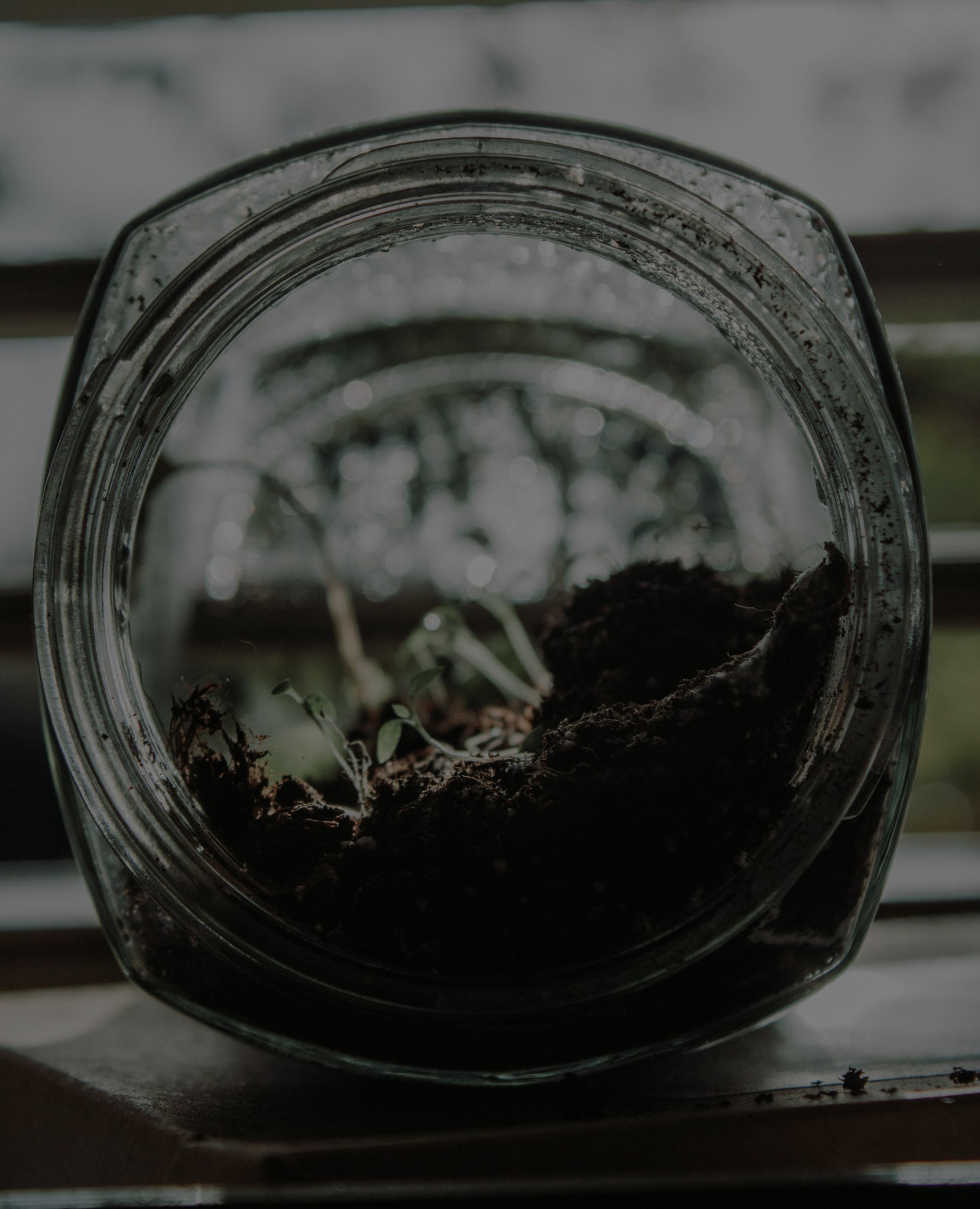
When I was eight or nine I kept a glass jar in the backyard that I set up like a small world. Soil in the bottom, a few rocks, a sprig of something green, a little water pooled in one corner. I was after salamanders and lizards, and every so often I caught one and kept it a night before letting it go. The best I remember was a light brown salamander with spots. I was proud enough of it that I got a hammer and a few nails and started punching air holes in the lid so it could breathe while hanging out on my desk in my bedroom.
We had a food forest behind the house before I knew there was a word for it. Loquat, orange, a twenty-foot avocado, berry bushes, and a California black walnut whose fruit stained everything it touched. My father had run the washing machine drain out from the garage window to the fruit trees nearby, which I would learn much later is called greywater. I spent hours out there by myself, turning over fallen fruit to watch the ants get to work, pressing my fingers into the soil to see how it was built. The worms and the pill bugs and the salamanders all seemed to know exactly why they were there. I wanted to know too. I could take only so much G.I. Joe before I wanted to be back outside with the jar.
My father came out to the concrete step one afternoon while I was working the nails into the lid. “What are you doing?” he said. “What is wrong with you? Catching lizards. Don’t you have any friends?” It was a salamander, not a lizard, though that was not the part that stung. He didn’t wait for an answer and went back inside. I was a kid who read street signs at three and came home with notes from teachers about skipping grades, and in about the time it took him to say it, I learned to be suspicious of the thing I loved most. I set the jar down. I have spent most of my life since in finance and operations and marketing, which I am good at and mostly enjoy, and which is a long way from the field biologist the boy with the jar was plainly going to become.
I am in my fifties now, and a few years ago I started building a garden by hand on an acre in Ventura County. I took a permaculture systems design course at Santa Barbara Community College. The soil is heavy clay, and the water comes off the Colorado River carrying so much lime that the iron locks up in the ground and the leaves go yellow while the roots sit in plenty. I war with the soil through chop and drop methods while making my own compost in a large trash can. I have lost a full bed of tomatoes to a heat wave and watched them cook on the vine inside a week. By any honest accounting it is a slow and expensive way to get a tomato; there is a Trader Joe’s four minutes from my house. But the morning a sweet potato slip I started from a sprouted tuber in the pantry finally put white roots down into a jar of water on the windowsill, I was eight years old again. Whatever my father saw that afternoon, I have spent real weekends and real money buying it back.
I have three kids and they are nothing alike. One of them is a person with autism, and he asks me questions so direct I sometimes must stop what I’m doing to answer them honestly. Not “why is the sky blue,” though that one is good too, but the ones that land closer to the bone: why do you do it that way, why does that matter to you, why are you doing this right now instead of the other thing. A child who has not yet been taught to quit asking will walk you up to the why of your own life and wait there while you find it. When you are tired and have taken a few decades of hits, the easy move is to do what was done to me, to treat the question as an interruption and wave it off.
I stay in it long enough to answer.
The thing the boy with the jar could do without trying is the thing I work hardest to hold onto now: standing in front of something without turning it straight into information. I chase it with a camera. When I photograph people the frame I want is the half second before or after “say cheese,” the candid one where someone forgets I’m there and is just himself. Those pictures carry more than any arranged shot, and you can’t stage them. You wait, quiet and ready, and catch them when they surface, the way you wait by a puddle.
There is a version of this that turns inward, and it is harder. The most difficult chapter in the book I have been writing was the one where I looked in the mirror and saw how I treated the person I love most, interrupting her, talking over her, running my own game in my head while she was still speaking. The same honesty scales up. It asks why we have come to accept things that should keep us up at night: why a man who crossed a border to pick our fruit and frame our houses without his family gets talked about the way he does, why a neighbor who prays differently became a category instead of a name.
Those are salamander questions.
They ask you to get down close to something you were told to stop looking at and be honest about what is actually there.
I have spent the last month writing about machines that will answer any question you put to them in full sentences before you have finished asking. There will be more of it; the “rogue AI agent” breakouts and the grand announcements of the Singularity are not going to slow down. None of those answers has made me feel what the white roots on that sweet potato made me feel, or what my son’s question makes me feel when it catches me flat. I could pre-order whatever Rockstar Games ships next and stand in line for it at midnight, and it would not come close.
I still keep a jar, more or less. I go out back and turn over the fruit to watch the ants work. I let the salamander go every time, and I never stop looking for the next one.
• • •
Are you just catching up? Here’s the trail that led to this one, if you want to see what we’ve been researching: