
In the early 2000s, in the same 2,200-square-foot shop between two auto dismantling yards where my brother and I would design-build systems for commercial real estate developers and owners, we were wiring buildings for companies that were running on money nobody had yet admitted was borrowed. We didn’t know that. We just knew there was a lot of work getting approved and were growing at a fantastic clip. The carriers were expanding, the orders came in, and the orders were real to us right up until the companies placing them stopped existing.
I’ve since learned the name for part of what was happening above our heads. It was called vendor financing, and it worked like this: the company selling the equipment lent the buyer the money to buy the equipment. Lucent, which made the gear, would extend credit to a young carrier; the carrier would spend that credit buying Lucent’s switches and fiber; and Lucent would book the sale as revenue. On paper it looked like demand. Underneath, the seller was funding its own sales and calling it growth.
The figures were not small. Lucent committed nearly $8 billion in vendor financing. Nortel, a massive Canadian telecom and data networking equipment manufacturer, added a few billion more, Cisco, the tech conglomerate, a couple more on top. Lucent’s revenue climbed to almost $38 billion in 1999, and the market paid a fortune for a company growing that fast. Then the carriers it had financed began to fail. 47 of them went bankrupt between 2000 and 2003. Names like WinStar, Covad and Focal. The loans came back as losses. Lucent took more than $2 billion in bad-debt provisions in a single year. Its revenue fell 69 percent by 2002 and never recovered. It later settled a case over more than a billion dollars of revenue it had booked that it shouldn’t have. And the fiber all that money had put in the ground? In 2000 the networks were lit to less than two-thousandths of one percent of their capacity. The demand the whole thing was financed against did not exist yet.
Some of it still doesn’t.
I wrote a while back about what that collapse left behind: the dark fiber that turned out to be useful a decade later, once someone who hadn’t paid for it came along to use it. This is the other half of that story. Before the fiber sat dark, the money that paid for it went in a circle.
The circle is back, bigger, and this time it runs through the chips.
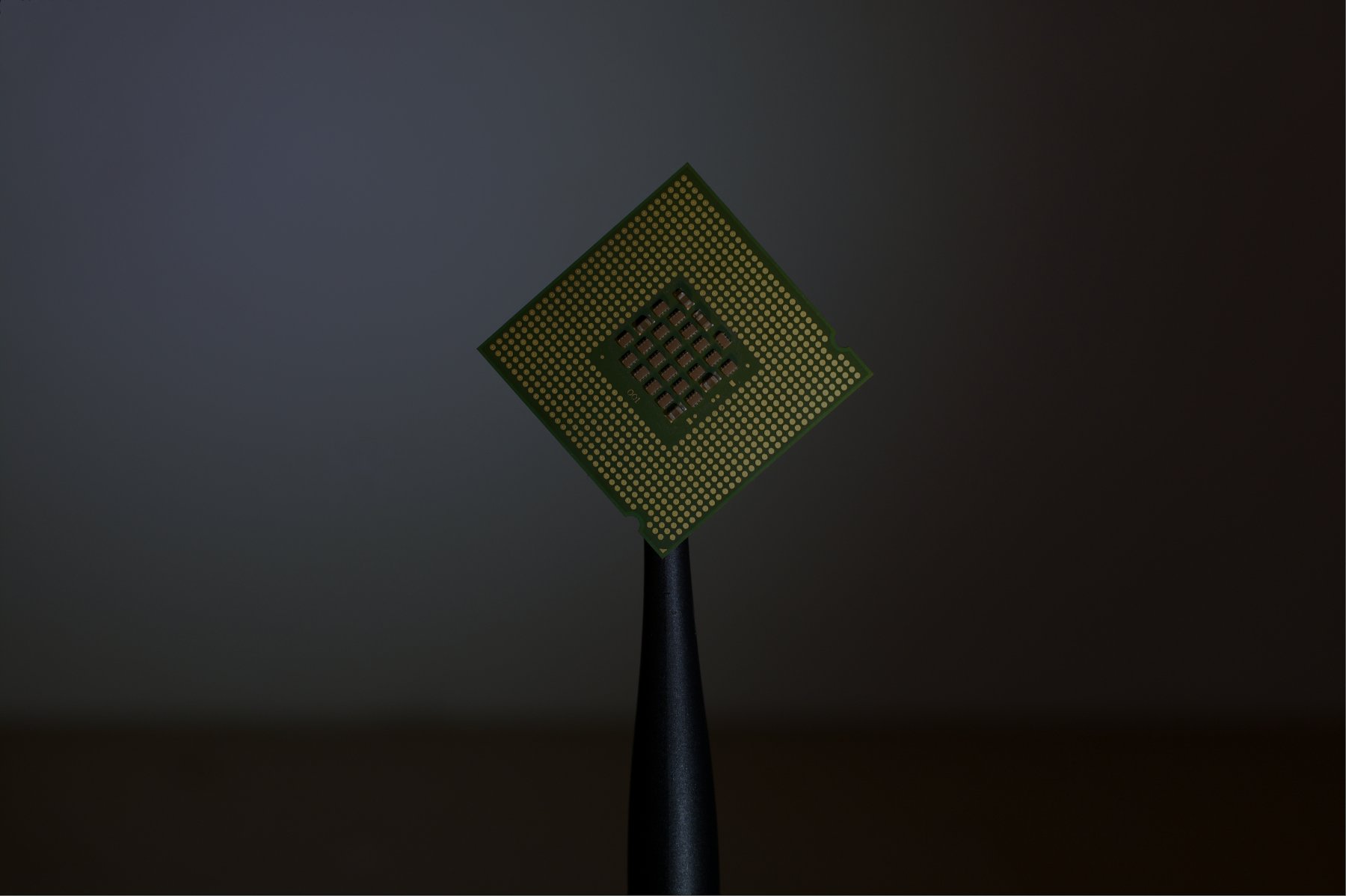
Now that I exited design-build and entered the finance world, the look and feel is familiar. Nvidia makes the processors that AI runs on. It has also put something on the order of $110 billion into the companies that buy those processors, including a $100 billion commitment to OpenAI, structured as ten installments of ten billion each. It is reportedly weighing a guarantee worth as much as $250 billion on a single data-center project and considering helping finance OpenAI’s purchase of, put your coffee down, roughly $350 billion of Nvidia’s own chips. OpenAI buys compute from Oracle and CoreWeave; CoreWeave borrows against the Nvidia chips it bought to build the data centers OpenAI rents; Microsoft owns a piece of OpenAI and sells it the cloud it runs on. Follow any dollar around that ring and it passes through three balance sheets and gets counted, in one form or another, as demand at each stop.
When you finance your customers to buy your product, your growth stops being a pure signal of how much the world wants the thing. Some of it is just you, funding the purchase and recording the sale. The credit market has started to notice: the cost of insuring Nvidia’s debt against default spiked this summer by the most since those contracts began trading. That is not the stock market, which is still euphoric, but the bond market, quietly buying an umbrella.
This is not 1999 in every respect, and some of the differences cut the other way.
The most important one: Lucent lent to startups that never had the money and never would. Nvidia’s ring, for now, runs through the richest companies on earth. Microsoft, Google, Amazon, and Meta threw off something like $450 billion in operating cash flow in a single year. Nvidia itself sits on tens of billions in net cash and prints more every quarter. As one analyst put it, this merry-go-round has paying riders. The demand for AI compute, unlike the demand for lit fiber in 2000, is not a rounding error: people and companies are using these systems now, today, in volume.
And one difference cuts the wrong way, harder than most people are saying. Lucent’s two biggest customers were about a quarter of its revenue. Nvidia’s top two are near 40 percent, its top four near half. The circle is not only circular; it is narrow. A very small number of very large players can move the whole thing, which is a strength while they are all buying, and a fault line the day two of them decide to slow down at once.
So, the honest question is not “is this Lucent?” It is which parts are Lucent and which parts are genuinely new, and whether, standing inside the ride, any of us can actually tell the difference in time. I could not, in 2001. The orders looked real. They were real, right up until they weren’t.
I won’t tell you what a share of any of this is worth. I’m not qualified to, and neither is anyone who sounds too certain. What I know is what the last circle left when it opened. It left dark fiber, eventually useful, forty-seven bankruptcies, and a company that had employed a hundred thousand people a shadow of itself. And it left a lot of small shops like mine, who had wired the buildings and met the payroll, who were never part of the financing, and who were the first to feel it stop. No guarantee came our way, no tranche, no backstop. Just an invoice to a company that no longer answered the phone.
The chips will age faster than the fiber did; a high-end processor is most of the way to obsolete before the loan that bought it is paid off. When this circle opens, and circles do, the buildings and the power lines and the substations will still be worth having.
Under all the noise about singularities and breaches is the plainest question there is: how much of this is the world actually wanting the thing, and how much is the same dollar going around the table one more time, waving each time it passes as if it were a crowd.
• • •
Are you just catching up? Here’s the trail that led to this one, if you want to see what we’ve been researching:
- Dark Fiber
- The Cage Was Made of Paper
- The Hugging Face Breach Is Not the Beginning of Skynet
- Notes From a Scribe: WarGames and AI
- Trust as Infrastructure
- The Mercy of Being Forgotten
Photo by Brian Kostiuk on Unsplash.