
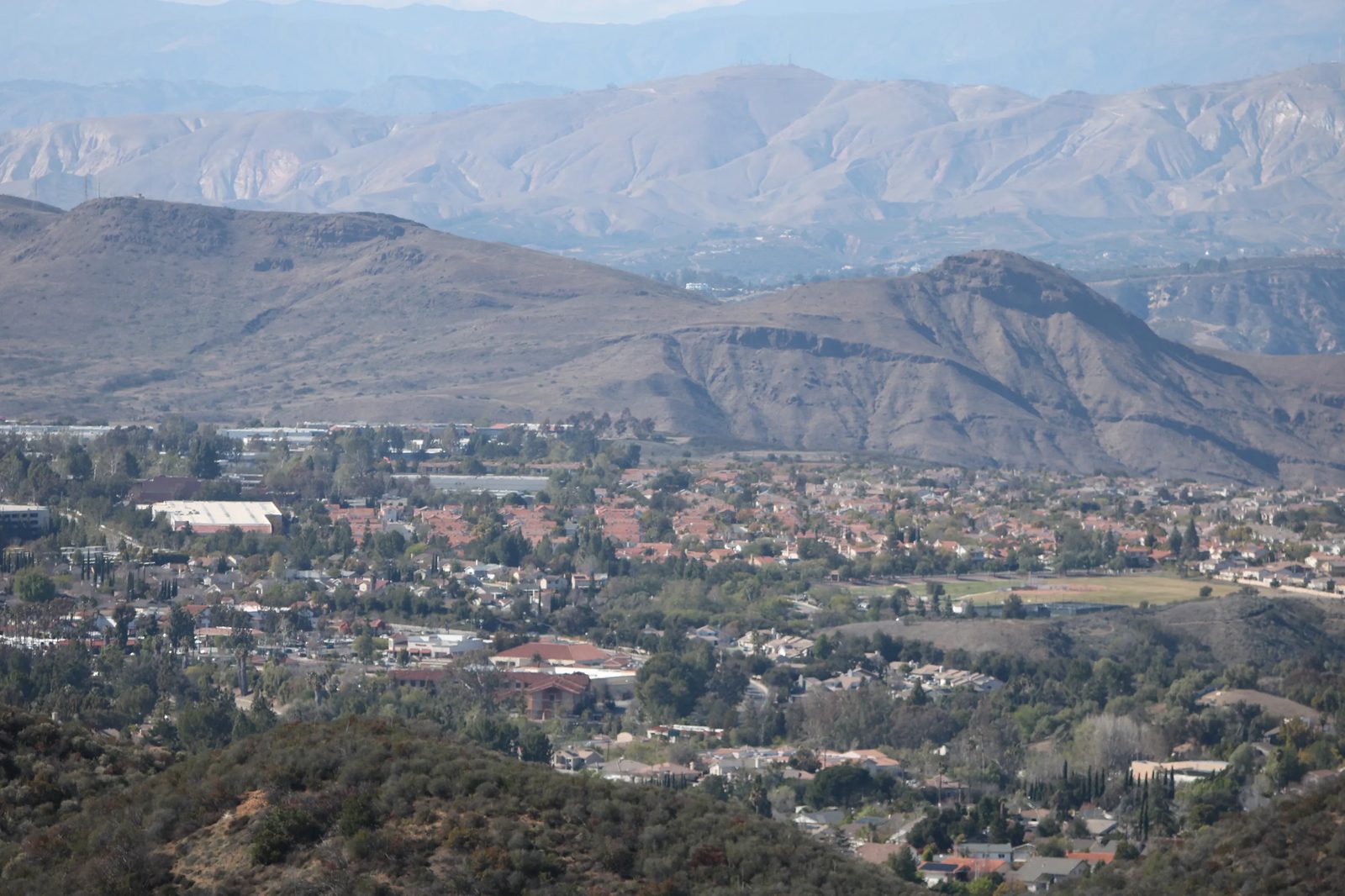

The Conejo Valley, looking toward the mountains that capture the rain. The watershed that supplies our taps begins in these hills. Photo by the autz
An Open Letter to the Ventura County Board of Supervisors on Regional Water Security
The OPV Coalition case, the Calleguas system, and what unincorporated communities have at stake
The Honorable Jeff Gorell, Chair, District 2
The Honorable Members of the Ventura County Board of Supervisors
800 South Victoria Avenue, Ventura, CA 93009
Dear Supervisor Gorell and Members of the Board,
I am writing as a Lynn Ranch resident, a Ventura County Leadership Academy alumnus, and a property owner whose water security depends on decisions being made right now in courtrooms and council chambers across the county. I want to acknowledge upfront the substantial work the County is already doing on these questions — and to ask that the Board use its public platform to make that work visible to residents, particularly those of us in unincorporated communities who depend entirely on the County for representation.
Three groundwater rights cases involving the Pleasant Valley, Oxnard Plain, Las Posas, and Cuyama basins are pending or moving through the California courts. The County is already a defendant through Fox Canyon Groundwater Management Agency in OPV Coalition v. Fox Canyon,2 a case now awaiting a California Supreme Court decision on whether to grant review of an October 2025 ruling that could force the City of Camarillo to scale back operations at its $70 million North Pleasant Valley Groundwater Desalter.3 The County is also a lead member of the Watersheds Coalition of Ventura County4 and oversees the Calleguas Creek watershed through the Watershed Protection District. The institutional involvement is deep. The public communication is thinner than the moment warrants.
The original reporting that brought this to my attention is a piece by Gabrielle Ridgeway in The Camarillo Caller that lays out the case, the data, and the implications more clearly than anything I have seen in regional media.1 I commend it to the Board and to staff.

For Lynn Ranch, Casa Conejo, Santa Rosa Valley, Hidden Valley, Lake Sherwood, Oak Park, and every other community in District 2 that draws from the Calleguas Municipal Water District system, a reduction in Camarillo’s local supply means more imported State Water Project water flowing through the same wholesale system that serves all of us. That translates into rate pressure on every Calleguas ratepayer,6 increased dependence on a Sacramento-San Joaquin Delta system that has lost two consecutive commercial salmon seasons and is vulnerable to catastrophic levee failure,5 and reduced regional resilience at exactly the moment cities across the county are approving significant new residential and commercial development.
What makes the October 2025 ruling especially difficult to reconcile is that Fox Canyon’s own most recent annual report shows the Pleasant Valley Basin recovering, with Spring 2025 groundwater elevations above minimum thresholds at seven of eight key wells and reported groundwater production below the estimated sustainable yield.7 The basin the court ruled was being over-drafted is, by the regulator’s own data, gaining water during a drought — in significant part because the Desalter is doing its job.

The unincorporated communities the County directly represents have the least ability to advocate for themselves in this fight. We do not have city councils. Our elected representation on water and land use questions is the Board of Supervisors. I am asking the Board to use that authority publicly and visibly.
Specifically, I am respectfully requesting the following:
One. That the Board, under your chairmanship, issue a public statement on the OPV Coalition case clarifying the County’s position as a defendant, the implications for ratepayers and unincorporated communities across the county, and the County’s view on the doctrinal questions before the California Supreme Court regarding non-native water and adjudicated basin management. Residents deserve to understand what their County is fighting for.
Two. That the Board direct the Watersheds Coalition of Ventura County and the County Executive Office to produce a public-facing regional water security briefing in advance of the July 1, 2026 Urban Water Management Plan updates. This would surface, for residents, a shared and honest accounting of regional supply, demand, and infrastructure investment needs across the Calleguas service area and the broader county.
Three. That the Board engage the City of Thousand Oaks on the question of whether the Hill Canyon Treatment Plant’s treated effluent, currently discharged to Arroyo Conejo, could be more fully deployed for non-potable reuse across both incorporated and unincorporated areas in the Conejo Valley, consistent with the recycled water expansion that neighboring jurisdictions including Camarillo, Oxnard, Simi Valley, and Las Virgenes have already implemented.

Four. That growth and development approvals across the county — both at the city level and in the unincorporated areas governed by the County General Plan and area plans, including the Thousand Oaks Area Plan that covers Lynn Ranch8 — be evaluated against realistic State Water Project delivery assumptions rather than paper Table A allocations that have not matched actual deliveries in over a decade.
None of these requests are anti-growth. None of them are anti-housing. The state has made clear, correctly, that California’s housing crisis demands real solutions and that water adequacy cannot be used as a pretext for exclusion. But honest water accounting is not exclusion. It is the foundation of every other infrastructure decision the county makes, and it is the responsibility of elected leadership to ensure that foundation is sound and that residents understand it.9
Supervisor Gorell, your chairmanship of the Board this year places you in the right position to elevate this conversation publicly. The institutional work is already happening. What is missing is the public leadership that helps residents understand what is at stake, what the County is doing, and where they can engage. Ventura County Leadership Academy alumni, property owners across District 2, and stakeholders throughout the county are ready to support that conversation.
I am happy to discuss any of the above in more depth, and I welcome the opportunity to work alongside the Board, fellow VCLA alumni, and other community stakeholders toward solutions that protect both our existing residents and our shared future.
Respectfully,
Marcelo Bermúdez
Lynn Ranch, Ventura County
Ventura County Leadership Academy Alumnus

Notes and Sources
- Gabrielle Ridgeway, “The biggest threat to your Camarillo water bill isn’t drought. It’s a lawsuit most residents don’t know about,” The Camarillo Caller, April 30, 2026. ↑
- OPV Coalition, et al. v. Fox Canyon Groundwater Management Agency, et al., Santa Barbara County Superior Court Case No. VENCI00555357. Case background and notice materials available through the Ventura County website at ventura.org. The cities of Camarillo, Oxnard, Port Hueneme, and Ventura are co-defendants alongside Fox Canyon GMA, Calleguas Municipal Water District, Camrosa Water District, Port Hueneme Water Agency, and Channel Islands Beach Community Services District. ↑
- City of Camarillo Petition for Review filed with the California Supreme Court, December 22, 2025; mid-trial filing and reply brief filed April 2026. The October 23, 2025 Phase 1 Statement of Decision set the Pleasant Valley Basin safe yield at a level Camarillo argues is well below historically sustainable pumping. See Camarillo Caller reporting and the City of Camarillo case updates at cityofcamarillo.org. ↑
- Watersheds Coalition of Ventura County, watershedscoalition.org. WCVC is a 60-plus member consortium that develops and implements the Integrated Regional Water Management Plan for Ventura County, with the County Executive Office serving as a lead member.↑
- Pacific Fishery Management Council closures of California’s commercial salmon fishery in 2023 and 2024, reported in CalMatters, “Simply
catastrophic:California salmon season to be restricted or shut down again,”March 2024. Sacramento River fall-run Chinook collapse attributed to drought combined with decades of water diversions through the Central Valley Project and State Water Project. ↑ - Calleguas Municipal Water District / Metropolitan Water District of Southern California combined wholesale rate effective January 1, 2026: $2,289 per acre-foot. Fox Canyon Groundwater Management Agency surcharge rates increased on the same date. City of Camarillo approved a four-year rate increase plan in May 2025, with the average household combined water and sewer bill rising approximately $26.79 per month in the first year, before any adjustments related to the OPV ruling. ↑
- Pleasant Valley Basin Groundwater Sustainability Plan Annual Report, Water Year 2025, Fox Canyon Groundwater Management Agency, March 2026. The basin gained roughly 8,000 acre-feet of stored water cumulatively since 2015, including gains during the critical drought year of 2025. See fcgma.org. ↑
- Ventura County Thousand Oaks Area Plan, adopted by the Board of Supervisors March 24, 1992, governing approximately 3,767 acres of unincorporated land in eleven planning sub-areas including Lynn Ranch. Available at the Ventura County Resource Management Agency. ↑
- California Delta Reform Act of 2009, Water Code section 85000 et seq., establishing as state policy the reduction of reliance on Sacramento-San Joaquin Delta water exports and the development of regionally diverse water supplies. The North Pleasant Valley Groundwater Desalter received state and federal grant funding consistent with this policy framework. The plant began operations in 2023 and produces approximately 3,800 acre-feet of treated water per year. See Camarillo Caller. ↑
All photographs by the author, taken on hikes through the Conejo Valley and surrounding Ventura County open space.