
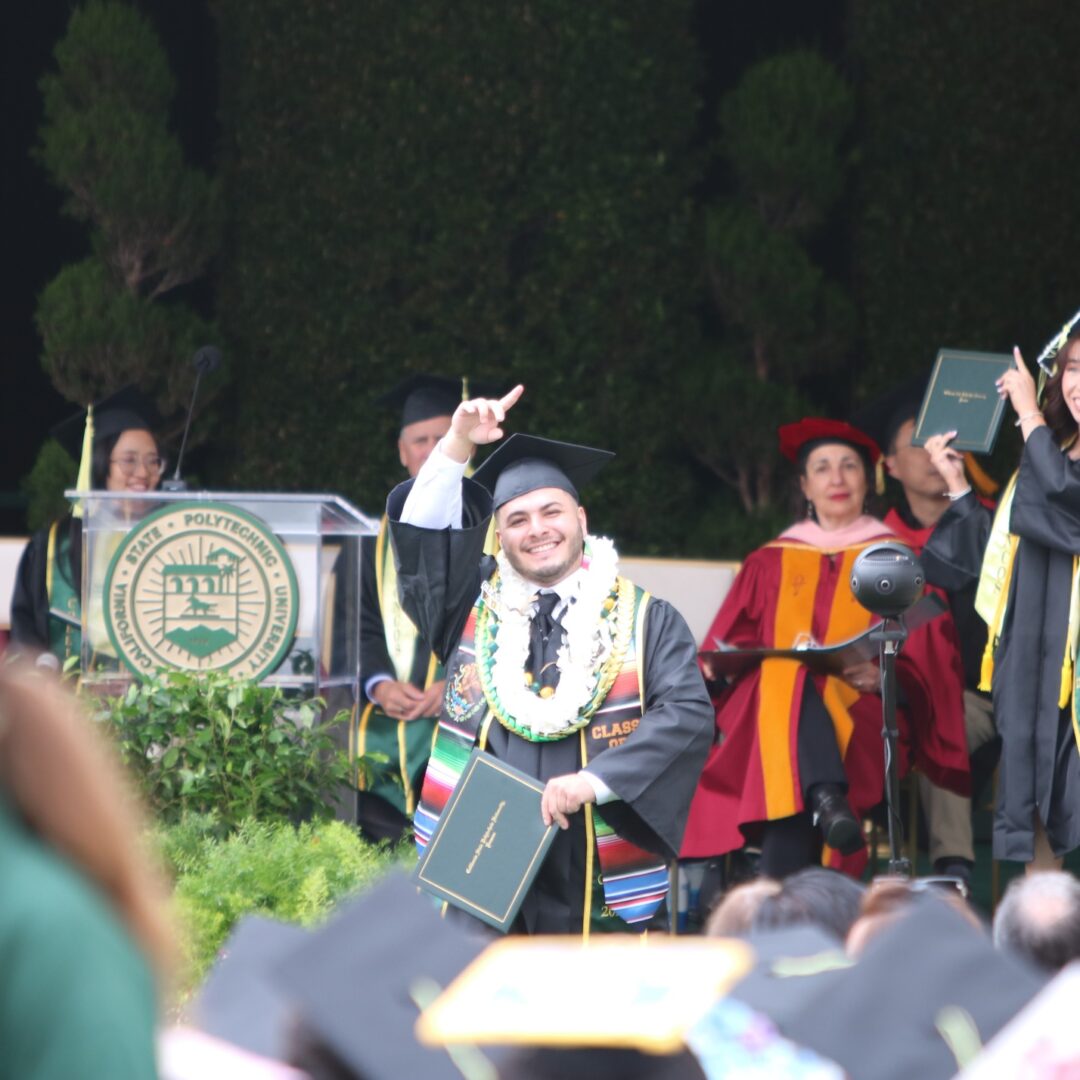
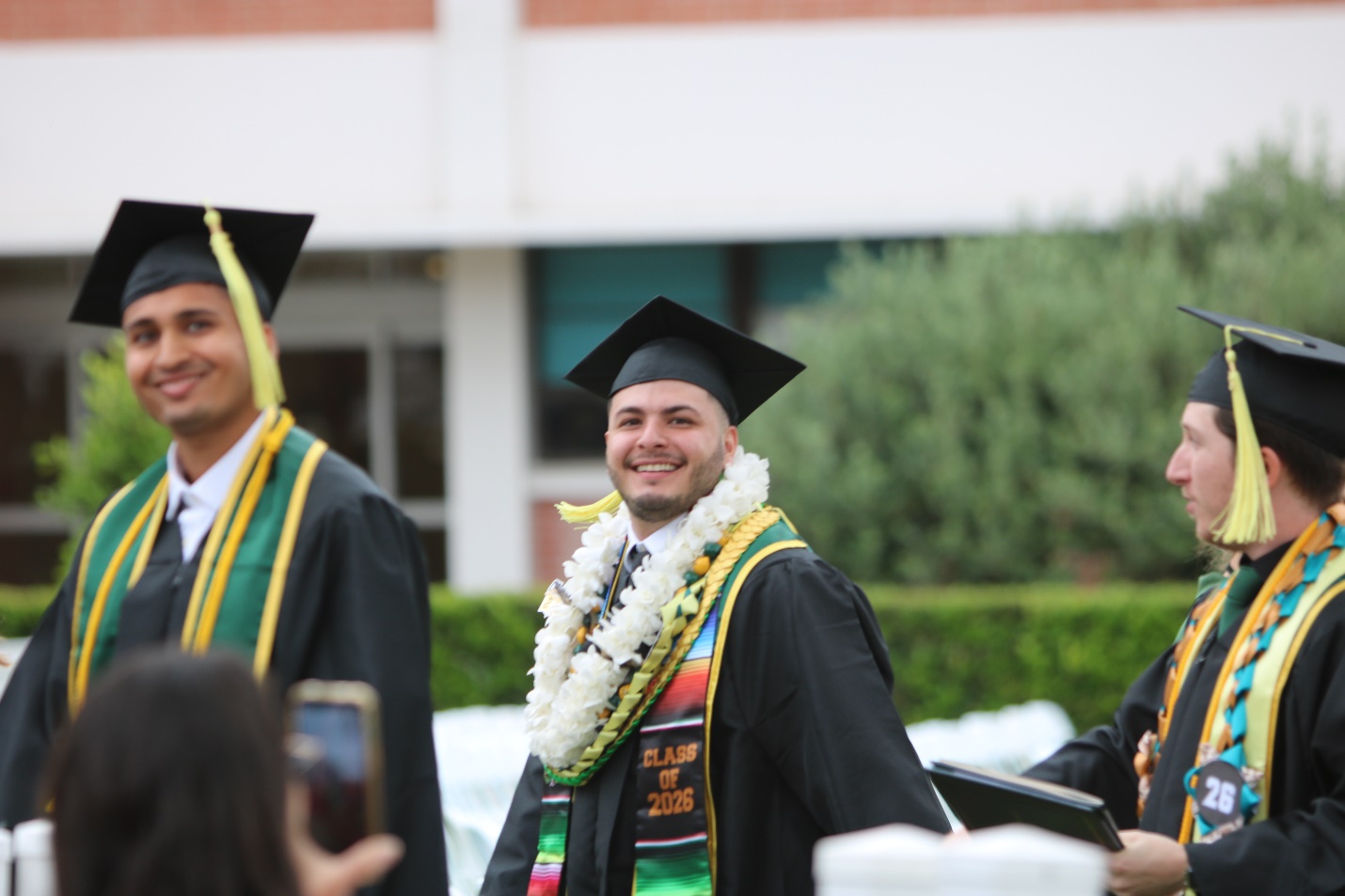
Aiden Eli Oliver Bermudez walked across the stage at Cal Poly Pomona on Friday. Collins College of Hospitality Management. Class of 2026. He held up the diploma and threw an L with his fingers for the family in the seats. Then he walked off the stage and the ceremony ended and the photos were taken and the family dinner happened and the weekend passed.
Today is Monday. There is no class to get to. No syllabus, no group project, no professor’s office hours. The structure that organized four years of his life ended on Friday afternoon and was not replaced by anything. This is the part of graduation few talk about at the ceremony.
He wants to build a career in stadium operations and event hospitality. Gameday logistics, venue management, the people side of running a building that holds forty thousand strangers for four hours and then empties out clean.
He has been at it for months already. Cold calls to operations directors at venues across Southern California. Volunteering at events to be in the room. Showing up to industry mixers as the youngest person there, with a business card I helped him design and print so he has something to hand out when the conversation goes well. He sends the occasional Indeed and LinkedIn application because that is what every career services office in America tells a graduating senior to do.
The applications go into a pile that does not have a bottom.
A friend of mine runs a hiring platform. He told me about a recent role at a company most people would want to work for. The post went up. Inside twenty-four hours, sixteen hundred people had applied. Half were disqualified on the basics. The other eight hundred were qualified and indistinguishable. Same degree-shaped credentials, same keyword-tuned resumes, same cover letter the model wrote in under a minute. The hiring manager looked at the pile and had no way to pick.
This is not a story about one job. This is every job worth having, at every company a young person would want to work for, in 2026. The tools that were supposed to make applying easier made applying meaningless. A resume that takes ninety seconds to generate is worth roughly ninety seconds of attention. Multiply that by sixteen hundred and you understand why no one is reading them.
Aiden is currently working at a fast casual restaurant to keep the lights on. The schedule gives him four to six hours a shift, sometimes five days a week, sometimes three. At California’s minimum wage that is not a living. It is barely a phone bill and $6.00/gallon gas. The only way a kid in his cohort makes the math work is to live at home with a parent who has a spare room, or to share a two-bedroom apartment with four other twenty-two-year-olds who are all on the same trajectory and all keeping a shared spreadsheet of ‘who owes what’ for groceries and utilities. The second option requires unusually high communication and a friend group that has not yet started to drift. Most of his friends are doing one or the other. There is no third option that I have seen.
So, he works the schedule he gets, and he keeps making the calls.
The thing that bothers me, watching this from a parent’s seat, is how thoroughly the system has convinced his generation that the application is the work. Career services tells them to optimize the resume. The platforms tell them to tune the profile. Employers post the requisitions on Indeed and LinkedIn and tell applicants to apply through the portal. The kids do exactly what they are told. Then they wait. Then they wonder why nothing comes back.
The entry point to a career has not changed in a hundred years.
You can put an AI-enabled wrapper around it. You can build a better resume parser, a smarter applicant tracking system, a model that reads cover letters and ranks them. The mechanism underneath does not move. The job goes to the person already inside the room. Sometimes the room is a hiring manager’s office, and the introduction comes from a former colleague. Sometimes the room is a Saturday morning over coffee, and the introduction comes from a vendor who worked with the candidate once and remembered them. Someone who is trusted says a name, and a door that was not open is suddenly open. No platform has replaced this. The platforms have made the noise worse, which has made the trusted name more valuable, not less.
I know this because I have made my career inside that mechanism. Most of the people reading this know it for the same reason. The roles that mattered came through a phone call, a coffee, a name passed along by someone who had no obligation to pass it.
Which brings me to the ask.
Aiden is the kind of young person you want in your operation. He is twenty-two. He worked his way through school without making a production of it. He shows up early and stays late when asked. He played baseball, football, and ran track from the time he was old enough to put on a uniform through college. Every coach he ever had, going back to youth leagues, has said some version of the same thing to me without being prompted: “this kid changes the temperature of a room.” They were not talking about athletic ability. They were talking about presence. You cannot teach that and you cannot train for it.
If you run a stadium, an arena, a venue, an event company, a hospitality group, or a gameday operation anywhere in Southern California, I am asking you to do the thing the platforms cannot do.
Put his name in a room he is not in.
If you know someone who does, forward this.
If you want to talk to him directly, send me a message and I will make the introduction.
He walked across the stage on Friday. The fast casual schedule is what it is. The applications are doing what applications do.
The phone call is the thing that changes it.