



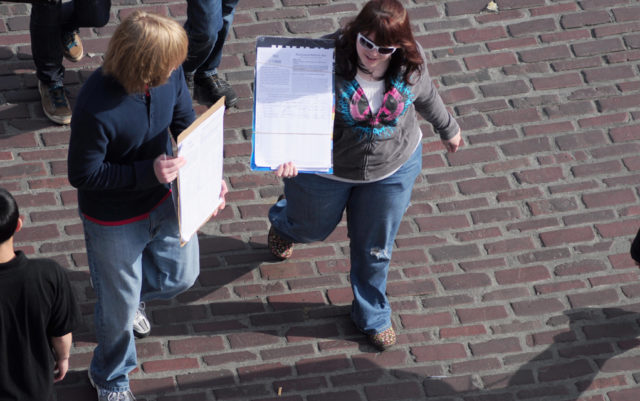
My wife and I have a routine that probably looks familiar. We go to Sam’s Club, pick up the Mediterranean kale salad we like, and take our time walking the aisles. We look at but do not buy things we do not need, talk through what we might cook that week or need to get done, and eventually make our way out holding hands.
At the exit, past the receipt check, there is almost always a table set up with clipboards and a short pitch.
“Protect your retirement! Stop new taxes! Save what you have worked for!”
The first time at the CVS, it barely registered. The second time at the grocery store, it felt more deliberate. By the third time at Sam’s, it was hard to ignore how consistent the presence had become. That is what led me to look into it.
The measure is called the Retirement & Savings Protection Act, and it is aimed at the November 2026 California ballot. The language limits what the state can tax in the future, with specific attention to retirement accounts and personal savings. It also prohibits retroactive taxation, meaning the state could not go back and apply a new tax to assets accumulated before the law existed.
For most voters, it will be one item among many. Something to review closer to election day. The effort behind it did not start then.
The organization sponsoring the measure is called Building a Better California. It launched in January 2026 and describes itself as a nonpartisan nonprofit. Within its first month, it had raised $35 million.
Twenty million of that came from Sergey Brin, co-founder of Google, who had relocated his primary residence to Nevada shortly before the organization was announced. Former Google CEO Eric Schmidt contributed $2 million, as did venture capitalist Michael Moritz. Other donors include Peter Thiel, John Doerr, DoorDash co-founder Tony Xu, Affirm CEO Max Levchin, Stripe co-founder Patrick Collison, and Stewart Resnick of the Wonderful Company.
The law firm handling the group’s filings had already submitted five ballot-initiative proposals before Building a Better California publicly announced its position on any of them. Three of those proposals are designed to counter a separate initiative, the California Billionaire Tax Act, which would impose a one-time 5% levy on net worth above $1 billion. The retirement savings measure is one of the three.
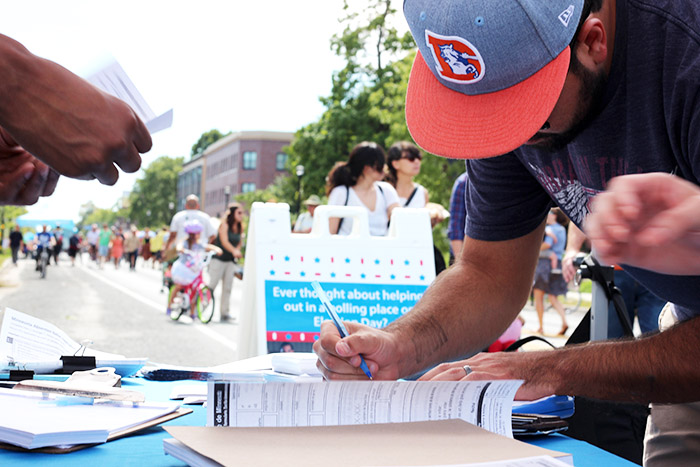
Political analysts have described the strategy as a set of spoiler propositions: if the wealth tax passes, the countermeasures could trigger legal challenges or redirect where the revenue flows. Signature gatherers working the retirement savings petition were being paid roughly $15 per signature. Those circulating the wealth tax initiative were being paid $12.
Building a Better California has also put $6 million behind a measure to subsidize first-time homebuyers and $5 million toward reforming the California Environmental Quality Act to accelerate construction approvals. The housing work is real. So is the connection to the tax fight.
The retroactive tax provision is the piece most people will not slow down to read.
Retroactive taxation is not common, but it exists and has been used. Prohibiting it permanently limits what any future legislature can do, not just the current one, and not just the wealth tax. For people holding appreciated assets over long periods of time, that kind of restriction carries significant financial value. The broader it is written, the more it protects.
The framing outside the store does not go into any of that. It does not need to. “Protect your retirement” lands before anyone asks what is actually being protected, or from what, or for whom.
 None of this settles the question of whether the measure is good policy. Reasonable people disagree on wealth taxes, on retroactive legislation, on how much flexibility a state government should have to respond to future fiscal conditions. Those are legitimate debates with evidence on multiple sides.
What is clearer is the timeline. The language was drafted. The funding was secured. The signature gatherers were deployed. All of that happened months before most voters will look at a ballot.
The version most people encounter is the one outside the store. A few sentences. A clipboard. The rest is already decided.
Ballots carry more than the language printed on them. The story of how something got there is part of what you are being asked to weigh.



Leave a Comment