
A coda to “Lucent Called, It Wants Its Business Model Back.”
The week Nvidia and six of the largest money managers on earth announced they would raise half a trillion dollars to build AI infrastructure, a construction crew was grading fifty-six acres of old farmland in Gilroy, California, on a lot wedged between a Walmart Supercenter and the Gilroy Premium Outlets. The two events did not share a page in any news feed. They are the same story, seen from opposite ends of the telescope.
Let’s start with the location. Gilroy calls itself the Garlic Capital of the World and throws a festival for it every summer. Amazon is putting a two-billion-dollar data center on that ground. The company applied in 2020. The public comment window opened and closed in 2024. Construction began this summer, and a good number of residents say they found out about it by accident, after the window had already shut. There was no ballot measure and no real hearing, and there did not have to be, because the project fit inside zoning rules the city wrote roughly forty-five years ago, back when the largest thing anyone pictured landing on a field was a warehouse. Mayor Greg Bozzo signed off. The civic benefits he could point to were real: a few hundred jobs, tens of millions in tax revenue over the coming decade, a million-dollar fire truck, grants to local nonprofits and to the Gilroy Garlic Festival.
All of it legal. Most of it, on paper, seems to be ‘for the greater good.’
Amazon says the site will use about four million gallons a year, roughly what thirty-six households use, and that it runs the water-cooling only on the hottest three percent of days. It is paying for reclaimed-water infrastructure the city can draw on the rest of the year, and it says the campus will be on fully recycled water by 2030. A resident named Rosa Rodriguez framed her worry in terms of the drought, which is fair. But if you are picturing a machine draining an aquifer while lettuce wilts in the next field, that is not what the numbers describe. A grower in that valley moves more water than that before lunch. The people telling you one data center will empty California are running the same adrenaline I have spent all summer writing against.
Let’s keep the alarm proportional, and follow the math and the money. Four million gallons is a rounding error. Four million gallons times the number of these that half a trillion dollars exists to build is a water policy, and no one anywhere was asked to vote on the sum.
That is the quiet efficiency of the structure I described in my series of articles around data centers and infrastructure. The financing at the top makes the buildout certain, and the zoning at the bottom makes each instance invisible. Apollo and Blackstone and BlackRock’s infrastructure arm are not raising five hundred billion dollars to put one campus in Gilroy. They are raising it to build the whole category, and the category arrives one forty-five-year-old zoning exemption at a time, in towns that learn the details after the comment period has closed.
The capital is planetary. The consent is handed out an acre at a time, to city councils who get a fire truck for their trouble.
Let’s put this on a scale. On one side, six firms that manage the retirement money of half the country sit down with the most valuable company on earth and commit to a number with eleven zeros. On the other, a family in Gilroy learns from a neighbor that the field they used to drive past is going to cool someone else’s servers. The decision that mattered was made in the first room. The cost lands in the second. The whole design of the thing is that the scales never learn if it is balanced or not.
This is what the compute-demand chart on an Nvidia presentation slide cannot show you. When the analysts on the financing call warned that the cycle could turn vicious if sentiment shifts, they were talking about the money, which can unwind in an afternoon. The other commitments do not unwind so easily: the regraded farmland, the potable water piped to a cooling plant until the recycled system is ready in 2030, the precedent that the next two-billion-dollar building can follow the same path in the same silence. Nvidia’s own stock fell about three percent the day the financing was announced, which tells you the market knows how to price the risk to capital.
Nobody has figured out how to price the risk to a valley.
Amazon didn’t break rules Gilroy had on the books. That is the trouble. The rulebook was written for a smaller machine, and the one we are now financing at half-a-trillion-dollar scale walks straight through a door that was left open long before anyone imagined it.
The cage was made of paper there too.
The garlic festival will get its grant. The fire truck will roll with its fancy LED lights and advanced computer systems to save lives. And the question that would have mattered, whether a farm town wants to become a place that cools other people’s computers, never reached a ballot, because by the time it was a question out loud, it was already a foundation.
• • •
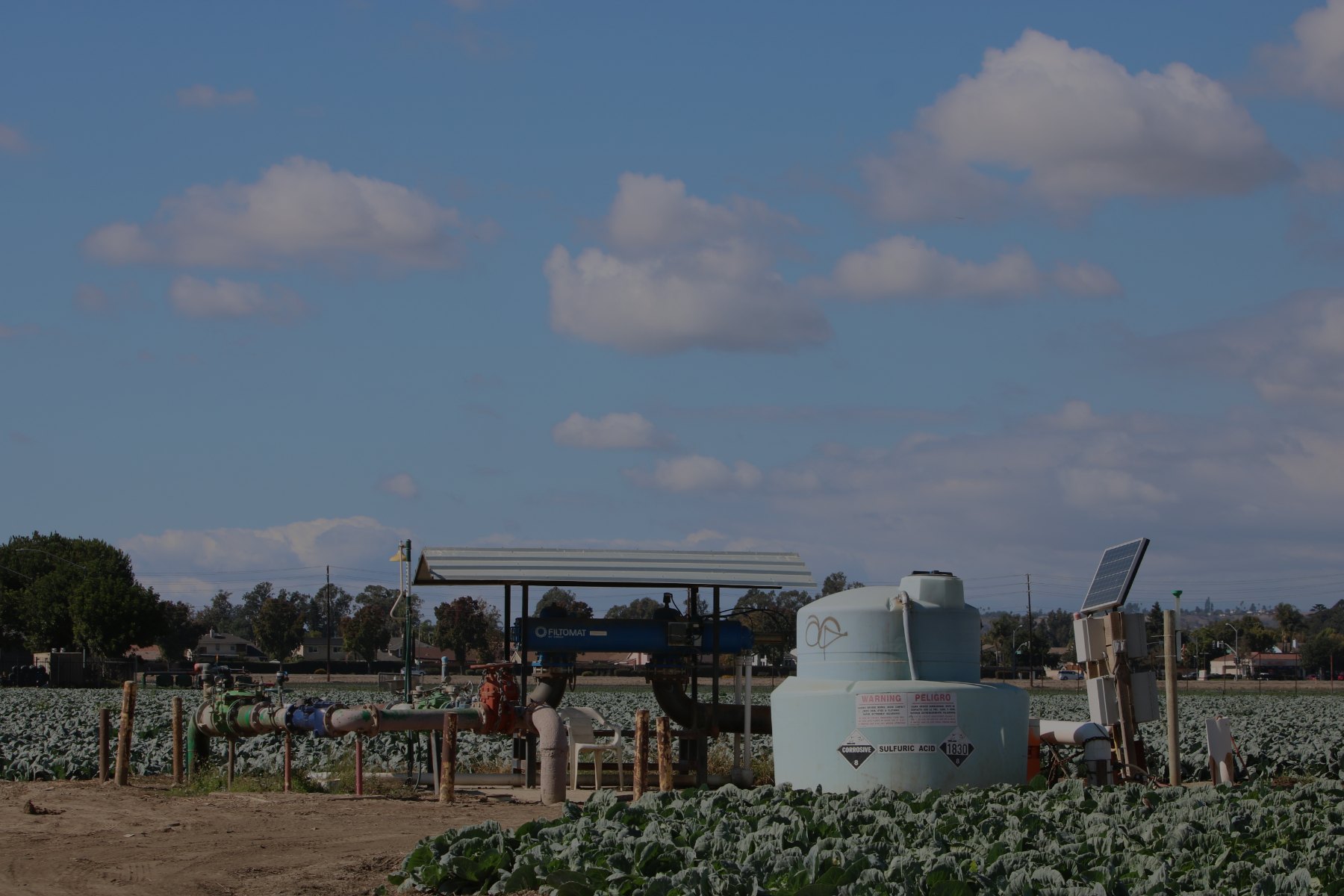
Hero photo by Marcelo Bermudez.
Are you just catching up? This piece caps a short series on the AI build-out. Start here:
- Lucent Called, It Wants Its Business Model Back, the circular-financing argument this piece extends.
- Dark Fiber, on what a burst infrastructure bubble leaves in the ground.
- The Cage Was Made of Paper, on safeguards that hold only on paper.
- The Machines and the Garden, the full series in one place.