“We’ve Been Silenced Long Enough!” – W.T.A.F.?
That was the refrain I read recently on LinkedIn, of all places. A professional platform now echoing with cries of spiritual defiance, as if some great religious martyrdom had taken place in the C-suite. It wasn’t Facebook zealots or Instagram influencers this time. It was founders. CEOs. Industry voices. Highly educated, well-connected, and deeply resourced individuals invoking silence as if their very access to megaphones proved oppression.
No one silenced them. They feared being disliked.
There’s a difference between persecution and discomfort, and too often, the American church confuses the two. When faith becomes a performative badge of grievance rather than a quiet compass for integrity and love, something is off.
Deeply off.
I’m not grieving. I’m not angry, either. I’m reflective.
When I see what passes for “Christian boldness” today, I don’t see the Jesus I know.
I see what happens when fear puts on the costume of righteousness and calls it revival.
When the Church Forgets the Story It’s In
If something in your spirit has felt off lately, you’re not alone. Many believers are not losing faith in God; they’re losing faith in institutions that claim to represent Him while acting in ways He never endorsed. What we’re seeing today isn’t new, but it’s not what the early church was meant to be.
Scripture was never meant to be a tool for tribalism, nor was Jesus crucified so that His name could be co-opted by modern empires for cultural dominance. Yet, over centuries, and especially in the last 200 years, the way scripture is read, taught, and weaponized has changed dramatically.
A Brief (and Honest) Look Back
Modern American Christianity didn’t emerge in a vacuum. In the 19th century, industrialization, westward expansion, and the trauma of civil war all contributed to a uniquely American religious identity, one that emphasized individual salvation, national exceptionalism, and divine favor for those who worked hard and followed the rules. Over time, this became codified into what scholars call “biblical inerrancy,” the idea that the Bible is not only divinely inspired but also free of all error, regardless of context.
But scripture never functioned this way in its original communities. It was dynamic, debated, and contextual. Faith wasn’t about controlling outcomes; rather, covenant, lament, justice, and humility.
As Bible scholar Daniel McClellan regularly points out, the Bible is not a monolith, and the attempt to reduce it to a set of rigid moral stances is not only poor theology, but also dangerous. It creates a system where power can masquerade as piety, and where questioning those in charge becomes framed as rebellion rather than discernment.
A lot of what gets passed off as “biblical” today reflects modern political priorities more than the historical and cultural context of scripture. Scholars like Daniel McClellan point out that what many refer to as “biblical” is often anachronistic theology shaped by 19th- and 20th-century American ideologies, rather than the intent of ancient texts. As noted on his website, “The Bible doesn’t speak. People speak using the Bible.”
When Jesus Is Co-Branded with Empire
It should concern all of us that many churches today have more in common with Rome than they do with Jerusalem. They prefer power to sacrifice, visibility to humility, control to curiosity. They canonize capitalism while ignoring the prophetic witness of Amos, Micah, and Jesus himself, all of whom warned that economic injustice and nationalism would rot a nation from within.
This isn’t just hypocrisy: this is heresy dressed in patriotism.
If your heart feels conflicted, maybe it’s because your spirit still recognizes that Jesus was never interested in creating “influencers.”
He was forming servants.
He wasn’t looking for applause.
He was preparing people to wash feet, not accumulate platforms.
Faith That Can Hold Tension
This doesn’t mean you have to abandon church altogether. I left my old church because of things I was seeing that interfered with my ability to worship, but I never stopped worshipping. I just did it at home. My mentor once reminded me that “the concept of leaving the house to go to the House of Worship is…not 100% accurate.” He explained that “you should leave a place of worship to come into another House of Worship,” and that “your worship should carry from one house to another.”
That stayed with me.
It permitted me not to feel guilty about stepping away from a broken structure, if I was still stepping toward God.
You can return to what made faith worth pursuing in the first place. The God who sits with the broken, not the powerful. The Jesus who confronts religious leaders more than He condemns sinners. The Spirit that brings peace, not tribal pride.
That is the difference between Christ and the brand called Christianity.
Not Afraid, But Not Blind Either
I don’t walk in fear. Wisdom tells me to lock my car doors in a tough neighborhood, but I know the authority I am given through the Word.
My son attends a college where recent demonstrations of vigil, violence, and political theatre have unfolded. I don’t tell him to be afraid. I ask him to be wise. Watchful. Aware. But not bowed by the winds of emotion or spectacle. That is what we are supposed to be known for: self-control, clarity, peace beyond understanding.
What I’m witnessing now is none of that. I see Christians flooding public discourse not with peace, but provocation. Not with stillness, but with the loud clanging of self-defense masked as witness. They are not resisting evil; they are reenacting it in a new costume.
And in that confusion, the Spirit feels foreign and misrepresented.
Faith as Spectacle vs. Faith as Substance
We’ve entered an era where spectacle and substance have split, and we’ve chosen the former. We consider viral posts a blessing and view confrontation as a form of obedience.
Virality has become virtue.
Philosopher Guy Debord warned in The Society of the Spectacle that modern life would be governed less by reality than by representations of it. “In a world that really has been turned on its head, truth is a moment of falsehood.” In the spectacle, people no longer relate to one another directly; instead, we relate to curated images and public postures, faith included.
We’ve traded spiritual intimacy for public performance.
We confuse being seen with being known.
We mistake applause for accountability.
But the God I serve did not light up the Temple with lightning bolts and vengeance when He was mocked.
He wept.
He wrote in the dirt.
He washed the feet of betrayers.
He fell silent before Pilate.
He resisted the urge to perform when tempted in the wilderness.
He could have jumped from the Temple roof.
He didn’t.
What does that tell us about the difference between being powerful and being performative?
What does it say about Christians choosing to become?
Weaponizing the Cross for Clout
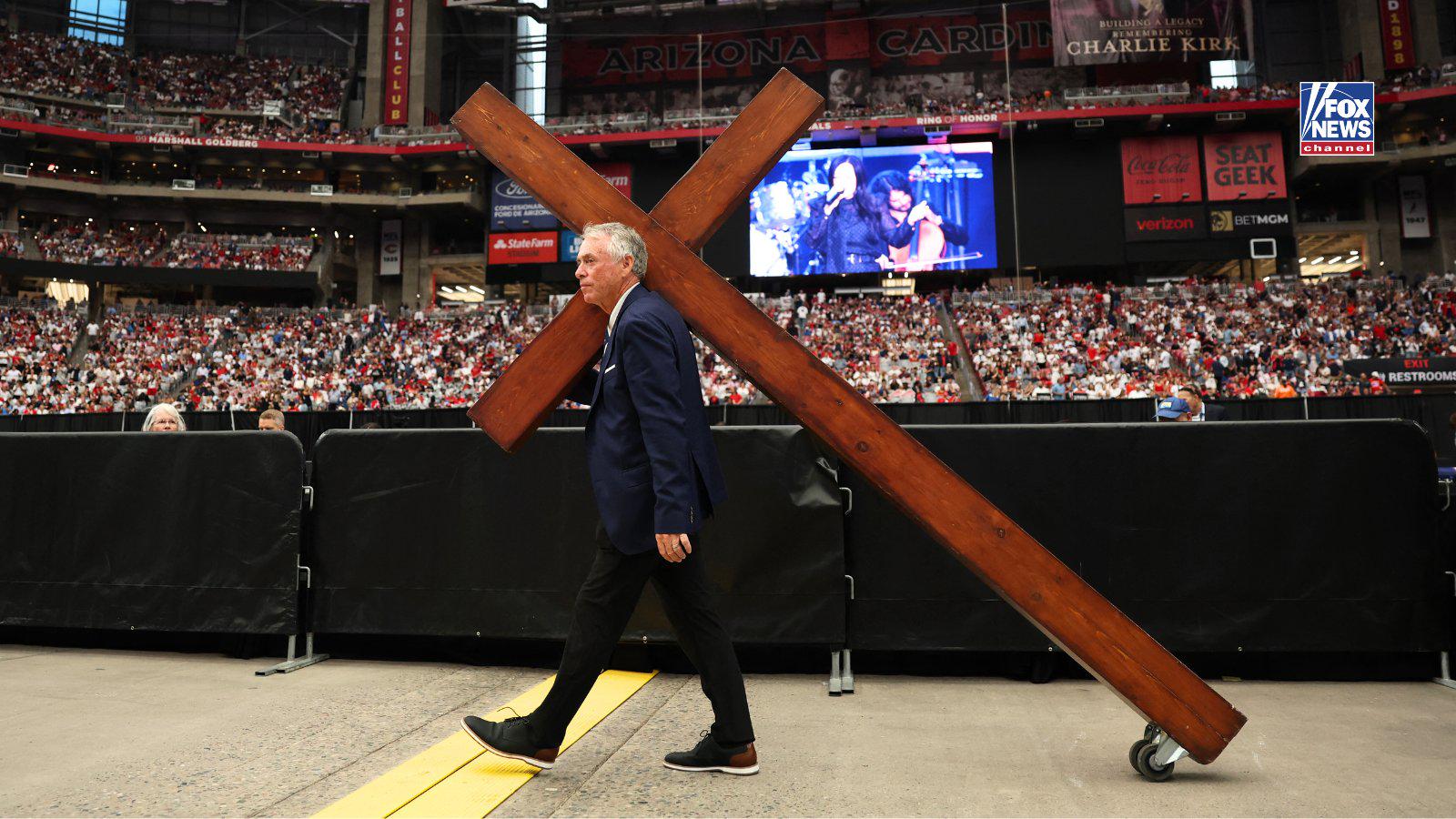
When I see well-dressed men and women with influence claim to be finally “free” to speak as Christians, I don’t see courage. I see selective memory. They were always free. What they weren’t willing to risk was disagreement. And instead of calling that what it is: fear of unpopularity, they’ve chosen to cloak it in righteousness.
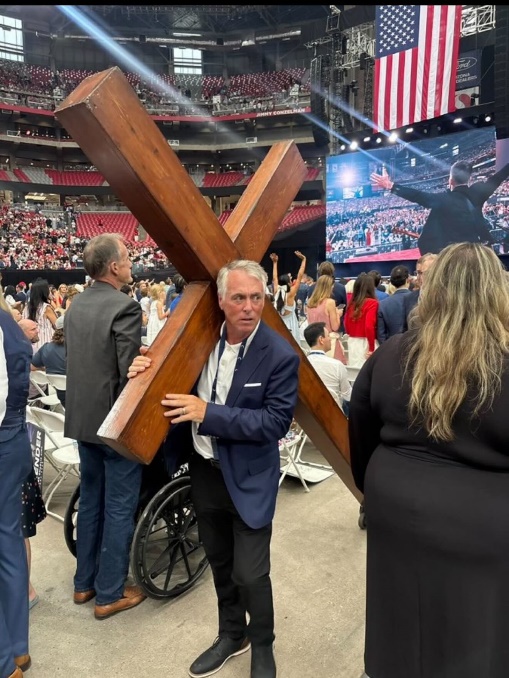
This isn’t new. The Cross has always been a dangerous symbol to wield for personal glory. What was once a tool of execution is now used as a hashtag. What once marked a call to die to self now fuels social media strategies.
If our public declaration of faith makes us louder but not kinder, more righteous but not more loving, is it really Christ we are lifting? Or just our brand?
The Wilderness of Disillusionment
I won’t lie. This season has made the church body feel distant for me. These are supposed to be my brothers and sisters, my chosen family, born not of blood but of Spirit. And yet, I’ve found myself standing at the edge of the gathering, watching people I once trusted offer their allegiance to spectacle, not sacrifice. Their voices are loud, but their posture looks nothing like Christ.
I’ve wrestled with the question: Is it me? Am I the one who’s drifted?
But I’ve come to see that it wasn’t God who left the room. It wasn’t God who chose performance over presence, or power over peace.
Not God. Never God.
But the institutions that claim to bear His name? That’s harder. When you grow up believing that being in the world but not of it means walking with both conviction and compassion, watching your faith become weaponized by culture warriors feels like betrayal.
And yet, I refuse to harden.
I think of the man who had been lying by the pool of Bethesda for thirty-eight years, so long that even hope may have withered. Jesus didn’t just heal him. He asked: “Do you want to be made well?” That question cuts deep. Bitterness can become a bed, and if we’re not careful, we’ll lie in it for decades.
I refuse to stay there.
I stretch out my hand, even if it trembles, and I receive what God still wants to give.
Disillusionment is not the same as deconstruction.
It’s not a rejection of faith, but a reckoning. I’m not leaving the Church; I’m staying because I still believe in it. But I’ll stay as one who continues to question. Who reflects. Who chooses silence over spectacle, until the Spirit feels recognizable again.
The Quiet Work Still Matters
You won’t see my prayers go viral. I’m not organizing a vigil with LED candles and dramatic fonts. But I’m loving my neighbor. I’m caring for my family. I’m telling my kids not to fear, but to observe. To be shrewd, not cynical. Gentle, not gullible.
I still believe in justice. I still believe in hope. I still believe in the Jesus who sat with sinners and didn’t need a press release to prove it. And I believe that when all the noise fades, what will remain is not who had the most views, but who bore the most fruit.
A Word for the Weary
If you, like me, have watched the recent wave of Christian posturing and felt the need to exhale quietly in the other direction. You are not alone.
If you feel your love for God deepening while your patience for institutional theater thins, you are not broken. You are probably right where you’re supposed to be.
If you still seek to live a life of faith, not for headlines but for healing, you are in good company.
We don’t need louder voices. We need deeper roots.
We don’t need more spiritual influencers. We need more spiritual integrity.
And we don’t need to say we’re not afraid. We need to live like it.