
On Martin Luther King Jr. Day, I find myself returning to a question that refuses to stay historical:
What kind of discipline did moral leadership require when words could get people killed?
Not reputations damaged, careers stalled, or social media platforms restricted.
Killed.
When Martin Luther King Jr. spoke publicly, he did so with the knowledge that a sentence could be taken out of context, repeated by others, and used to justify violence. Rumor did not need speed to be lethal. It only needed permission. That reality shaped how carefully he spoke, how deliberately he framed moral claims, and how often he chose restraint over escalation.
That restraint was not softness. It was discipline under threat.
Today, speech feels weightless by comparison. We move from reaction to publication in seconds. Misinformation does not spread because it is persuasive but because it is efficient. Emotion outpaces verification. The distance between belief and broadcast has collapsed, and with it, our sense of responsibility for what our words may become once they leave us.
And yet, people are still dying.
From Heather Heyer, killed while standing against organized hate, to community leaders whose names never become symbols, the throughline is familiar. Dehumanization precedes violence. Moral certainty supplies justification. Faith is often recruited to finish the work.
This is not new. What is new is how easily theological language is stripped of context and repurposed for grievance. Scripture becomes shorthand. God becomes a proxy. The Bible is no longer read as a text that demands humility but used as a tool that grants permission.
I’ve written before about how this permission structure forms. In Eyes Wide Open, I described how lists of claims, stripped of sourcing and context, are often presented as self-evident truth, followed by a question that does not interrogate them but quietly seals them. The posture appears curious, but the function is declarative. The question does not invite scrutiny. It renders scrutiny suspect.
That same pattern surfaced again in Manufactured Revival, where fear was framed as discernment and spectacle was mistaken for spiritual urgency. The language looked faithful on the surface, but it trained people to confuse emotional activation with moral clarity. Once fear is baptized, almost anything can be justified in God’s name.
More recently, in When Worship Feels Weaponized, I tried to name the cost of this dynamic inside the church. When faith becomes a delivery system for grievance, it no longer forms conscience. It hardens it. The result is not conviction or courage, but permission and certainty unmoored from responsibility.
In that environment, the question is not whether speech is protected.
It is whether speech is stewarded.
King understood that words do not belong to us once they are spoken. They move through other people’s fear, anger, and longing. They are reshaped by agendas we do not control. Moral leadership, then, required more than conviction. It required foresight. A willingness to ask how a statement might be used rather than how it would be received.
That discipline feels rare now.
We often confuse sincerity with truth. We assume intensity signals moral clarity. We circulate stories that confirm our fears and call it vigilance. Social media does not require us to be informed, only engaged.
The result is not persuasion but fragmentation. Being informed has become a moral obligation, not a preference.
That obligation does not mean consuming more content. It means slowing down. Reading past headlines. Learning how narratives are constructed. Asking who benefits from our outrage and who bears its cost. It means recognizing when a story is designed to inflame rather than illuminate.
It also means learning how to see people clearly.
Misinformation rarely takes hold because people are cruel. It takes hold because people are disoriented. Afraid. Carrying unaddressed pain. Fear simplifies the world. It narrows vision. It turns neighbors into threats and complexity into betrayal.
King never confused understanding with excuse. He named harm without denying humanity. He refused to turn his movement into a mirror image of the violence it opposed. That refusal mattered because it prevented moral clarity from becoming moral license.
The temptation today is to respond to distortion with humiliation, to counter certainty with louder certainty. We see it in the way crowds form around the most incendiary language, in how certainty circulates faster than context. And yet, moments of moral clarity still emerge amidst the chaos, not through loudness, but through care.
In Minneapolis this month, at a protest that spiraled toward violence, a young Black counter-protester named Isaiah Blackwell physically intervened to help Jake Lang, a self-identified Christofascist organizer, escape a threatening crowd. According to local reporting, Blackwell used his own body as a shield and guided Lang out of harm’s way before police or others arrived. This was not an act of political alignment. It was an act of moral discipline in a moment where restraint carried real risk.
We have seen the cost when that discipline fails. From Heather Heyer to Robin Good, community members killed after being publicly framed as threats, traitors, or enemies of righteousness, the pattern is consistent:
Language prepares the ground. Certainty supplies permission. Violence follows.
Moral leadership is not measured by volume. It is measured by care, by whether we can speak truth without surrendering responsibility for how that truth travels, and by whether we can act to protect life when easier answers pull us toward harm. Discipline, in King’s sense, was not limited to words. It was the kind of self-possession that could interrupt violence without demanding spectacle in return.
The church faces this test.
When God’s name is used to bless cruelty, something has already gone wrong. When Scripture is invoked to make violence feel righteous, faith has been hollowed out. Christianity was never meant to sanctify power or shield harm. Any theology that renders death acceptable has lost its center, no matter how familiar its language sounds.
King’s discipline reminds us that moral authority is not built through spectacle. It is built through seriousness. Through a refusal to let pain harden into permission. Through the slow, often lonely work of speaking carefully when care feels costly.
Words still carry weight. They always have.
The question is whether we are willing to carry them with the discipline that weight requires.
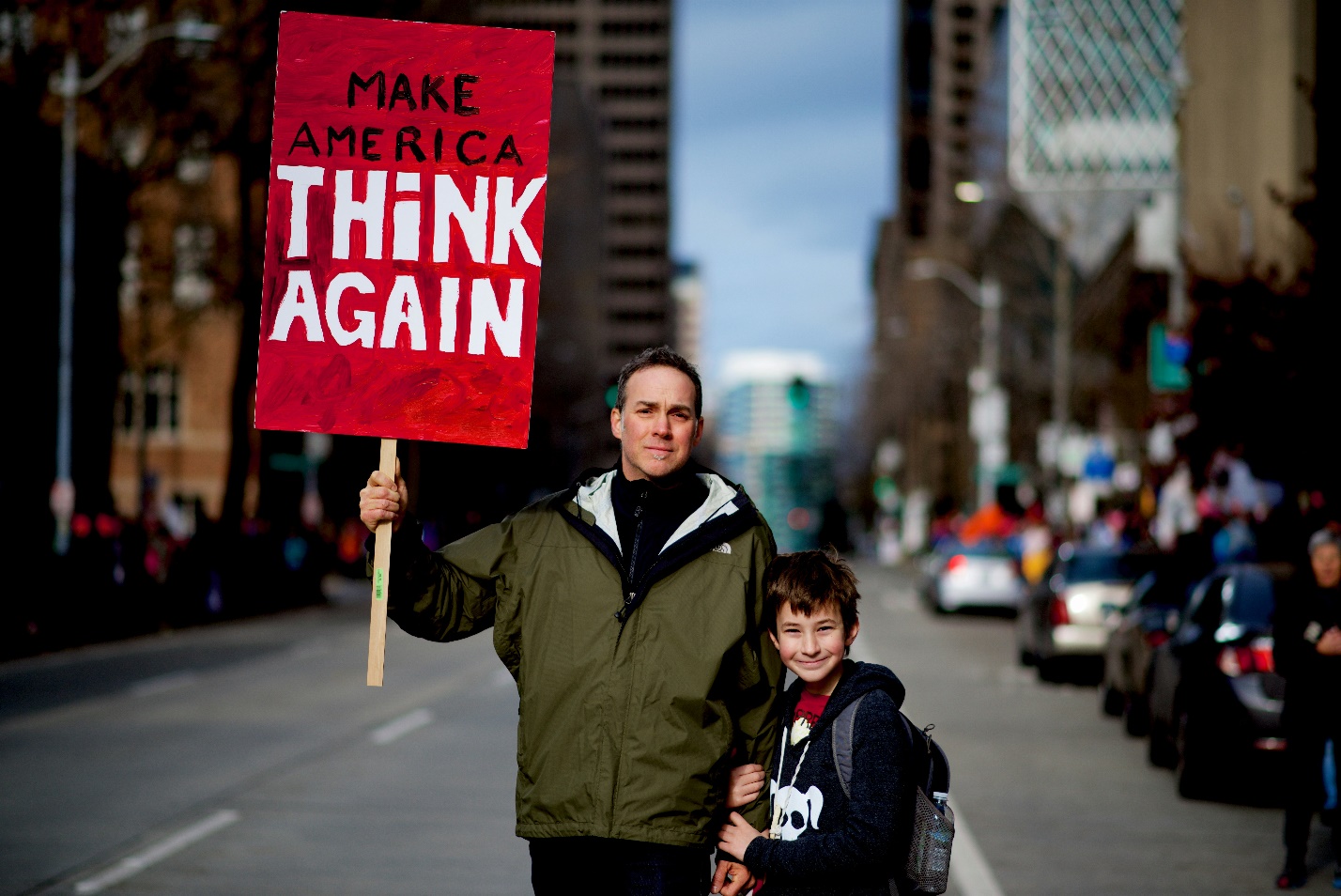
Photo by Jose M on Unsplash